Pets are not just our companions that accompany us, but they are part of the family and, at times, more than our loved ones. They are our partner in crime, our emotional mentor at times when we break down, and a strong supporter when we are at our rock bottom. In short, they are more than just a furry companion.
Although they snuggle into our hearts (and our couches), unlike humans, they have no idea that a spilled cleaner, a loose wire, or a pretty houseplant could actually hurt them. Whether you’re a proud ‘dog mom’, a ‘cat dad’, or juggling multiple furry roommates, creating a safe home environment isn’t just a choice—it’s an act of love and responsibility.
According to the American Veterinary Medical Association (AVMA), thousands of household pet emergencies every year are linked to preventable causes—like ingestion of toxic foods, chemicals, or unsafe spaces. The good news? A few smart tweaks around your home can drastically reduce risks and make your living space both stylish and pet-secure. From hidden hazards to simple design upgrades, here’s a how-to guide on keeping your furry pals healthy, happy, and out of trouble.
1. Keep Hazardous Items Out of Reach
Pets are naturally curious explorers. Dogs will sniff, lick, and chew anything they can reach, and cats can jump onto any shelf or counter you think is safe. Everyday items—like medications, cleaning agents, pesticides, and even vitamin gummies—can be toxic. The ASPCA Poison Control Center reports that nearly 20% of pet poisoning cases come from household chemicals and human medications.
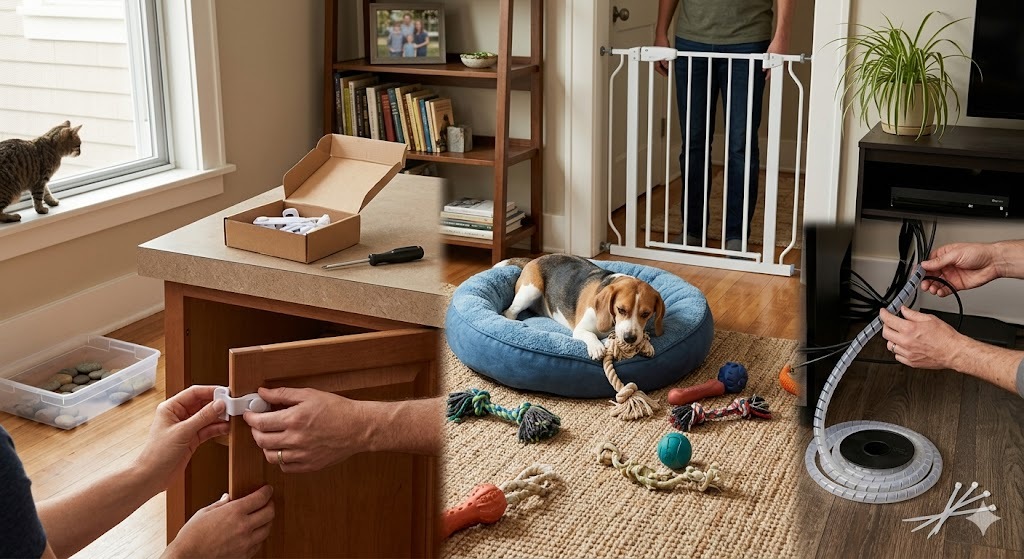
👉 Store these products in high cabinets or behind childproof locks. Switch to eco-friendly, pet-safe cleaners like vinegar, baking soda, or enzymatic sprays. If you use essential oils, be sure they’re vet-approved; some (like tea tree or eucalyptus) can harm your pet’s liver or lungs.
2. Choose Pet-Safe Plants (and Skip the Pretty but Deadly Ones)
Indoor plants elevate your décor and air quality—but not all green friends are good for your furry ones. Toxic favorites like lilies, dieffenbachia, aloe vera, and pothos can cause vomiting, drooling, or worse. Cats, especially, are prone to nibbling leaves out of boredom.
Go for pet-safe plants like spider plants, Boston ferns, and parlor palms. You can even create a ‘pet herb corner’ with catnip, basil, or wheatgrass to satisfy their natural curiosity safely. Bonus tip: elevate planters or use hanging pots to keep greenery stylish yet out of paw’s reach.
3. Hide Cables and Electrical Cords
Cords and cables look like chew toys to pets—especially teething puppies or curious kittens. Apart from electrocution, frayed cables can trigger fires or injuries. Bundle cords using cord concealers, cable boxes, or spiral wraps.
If your pet is a chronic chewer, spray cables with bitter apple deterrent or citrus-based repellents (they hate the smell). For tech-heavy homes, switch to wireless chargers and Bluetooth accessories—they cut clutter and danger at once.
4. Choose Pet-Friendly Furniture and Fabrics
A ‘pet-friendly home’ doesn’t have to look like a kennel. You can absolutely have Pinterest-worthy interiors and keep them functional. Opt for durable, easy-to-clean materials like leather, faux suede, or performance fabrics. Avoid velvet or linen—they trap fur and stain easily.
For sofas, go for tightly woven upholstery and choose darker shades or patterned textures to disguise fur. Add washable throws or pet blankets to protect high-traffic areas. And if you’re redoing your floors, vinyl, tile, or sealed hardwood is your best bet—easy to mop, resistant to scratches, and great for pets who shed.
5. Keep Floors and Walkways Clutter-Free
Pets love to dash around corners or play chase in hallways. A cluttered floor can lead to twisted paws or broken decor (and hearts). Keep walkways clear of shoes, cords, or kids’ toys. For multi-pet households, designate storage baskets for toys and rotate them weekly to keep boredom at bay.
Vacuum regularly to reduce dander and fleas—especially if you live in humid regions where these pests thrive. A robot vacuum can be your secret weapon—it saves time and keeps allergens low, which benefits both your pet and your lungs.
6. Create Designated Pet Zones
Every pet deserves a ‘safe zone’—a cozy nook that’s theirs alone. It helps them relax and reduces anxiety, especially during storms, guests, or fireworks. Create a mini sanctuary with a comfortable bed, chew toys, and a water bowl, away from heavy foot traffic or noisy appliances.
For cats, vertical space is everything. Add a cat tree, window perch, or wall shelves where they can observe the world without chaos. Dogs appreciate dens—so a crate with soft bedding or a corner tent can feel like a comforting retreat, not a cage.
7. Secure Windows, Balconies, and Doors
Open windows are an accident waiting to happen, particularly for cats with strong hunting instincts. Install sturdy screens, child locks, or mesh guards on windows and balconies. If you live in an apartment, invest in a ‘catio’ (cat patio)—an enclosed outdoor space that lets pets sunbathe and people-watch safely.
For dogs, ensure your yard fences are at least 6 feet high, with no gaps underneath. Check latches and gates regularly—adventurous dogs can become escape artists overnight.
8. Be Careful with Scented Products and Air Fresheners
We all love a fragrant home, but many synthetic scents are dangerous for pets. Aerosols, candles, incense, and even plug-in air fresheners can release toxins like formaldehyde. Cats are especially vulnerable since their livers can’t process many essential oils.
Opt for unscented or pet-safe natural products, such as soy candles, beeswax melts, or activated charcoal air purifiers. They freshen your home without harming your pet’s respiratory system.
9. Store Food Safely (Even the Healthy Kind)
You’d be surprised how many ‘human’ foods can make pets sick. Chocolate, grapes, onions, avocados, and anything containing xylitol (like gum or peanut butter) are major red flags. Keep food sealed in airtight containers and off countertops.
Train your family—and guests—not to feed table scraps, no matter how pleading those puppy eyes are. If you love cooking for your pet, stick to vet-approved recipes using safe, whole ingredients. And yes, dogs can have peanut butter—just make sure it’s xylitol-free.
10. Regularly Check for Hidden Dangers
Even the safest home can develop new risks over time. Conduct a monthly ‘pet safety audit’. Check for loose nails on furniture, splintering wooden floors, or small gaps behind appliances. Replace worn-out toys before they become choking hazards.
Keep your vet’s emergency number and a pet first-aid kit handy—include gauze, antiseptic wipes, tweezers, and a digital thermometer. For smart homes, consider a pet camera or sensor system that alerts you to movement or unusual behavior when you’re away.
Closing Down!
A truly pet-safe home isn’t about restricting your furry companions—it’s about giving them freedom within safety. Every small precaution—from storing cleaning supplies to choosing the right couch—adds up to a healthier, happier life for your pets (and fewer 2 a.m. vet emergencies for you).
Your goal? A space that looks great, smells fresh, and supports your pet’s natural curiosity without putting them in danger. Because when you protect your pets, you’re really protecting your peace of mind—and building a home filled with trust, comfort, and unconditional love. 🐶🐱💛