
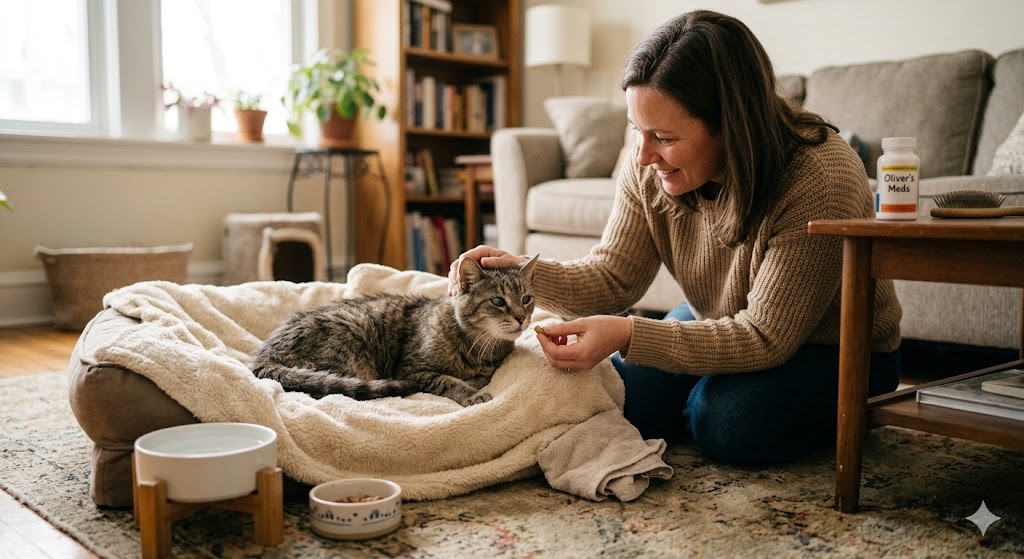
Caring for a sick or senior cat can feel like walking a tightrope. You want to give them the medication and attention they need, but you also don’t want every interaction to turn into a wrestling match or a stress fest. The secret? A calm, predictable routine that keeps your cat comfortable and keeps you sane.
Let’s walk through a day-in-the-life approach that turns care time into bonding time.
Start with a Peaceful Recovery Space
Imagine being ill and having people and noise swirling around you—stressful, right? Your cat feels the same. Choose a quiet, draft-free room or a cozy corner of your home with minimal foot traffic. Add a soft bed, a familiar blanket, and a favorite toy. Keep food, water, and a litter box within easy reach so your cat doesn’t have to roam when they’re tired or sore.
A low-stress environment does more than comfort: it lowers heart rate and helps the immune system focus on healing.
Create a Predictable Daily Rhythm
Cats thrive on routine, especially when they’re unwell. Try to feed, medicate, and check on them at roughly the same times each day. Morning might include a gentle hello and a quick visual check; evening could be a cuddle session while you note their appetite or energy level.
This consistency helps your cat relax and gives you a reliable picture of how they’re doing—so you can spot changes before they become setbacks.
Medication Without the Drama
Few things test a cat parent’s patience like giving pills. But with the right tactics, you can avoid the classic chase-and-claw scenario.
- Pill pockets or soft treats can hide most tablets.
- For liquid meds, a small syringe angled toward the cheek works better than trying to pry the mouth open.
- Always follow with a treat or a favorite play session so medicine time feels positive, not punitive.
Ask your vet if a flavored compound or transdermal gel is possible—sometimes you can rub medication on the ear instead of forcing it by mouth.
Track Appetite, Energy, and Comfort
A simple log turns guesswork into insight. Jot down how much they ate, how often they used the litter box, and any mood changes. A spreadsheet, a notes app, or a pet-care app like Pawtrack or PetDesk all work.
Patterns matter: a slow decline in appetite or a sudden drop in playfulness may signal pain or a brewing infection, even if your cat seems ‘fine’ at a glance.
Keep the Bond Strong
Illness or aging doesn’t mean the end of fun. Short play sessions, gentle brushing, or just sitting together while you read can lift your cat’s spirits and yours. Let them choose the pace—sometimes the best care is quiet companionship.
Bottom Line
Building a low-stress home routine isn’t about creating a strict hospital schedule; it’s about blending medical care with love and consistency. A calm space, gentle medication strategies, and daily tracking give your cat comfort and give you confidence that you’re doing everything possible.
With a little planning, caring for a sick or aging cat can strengthen the bond you share—and make every purr that much sweeter.