
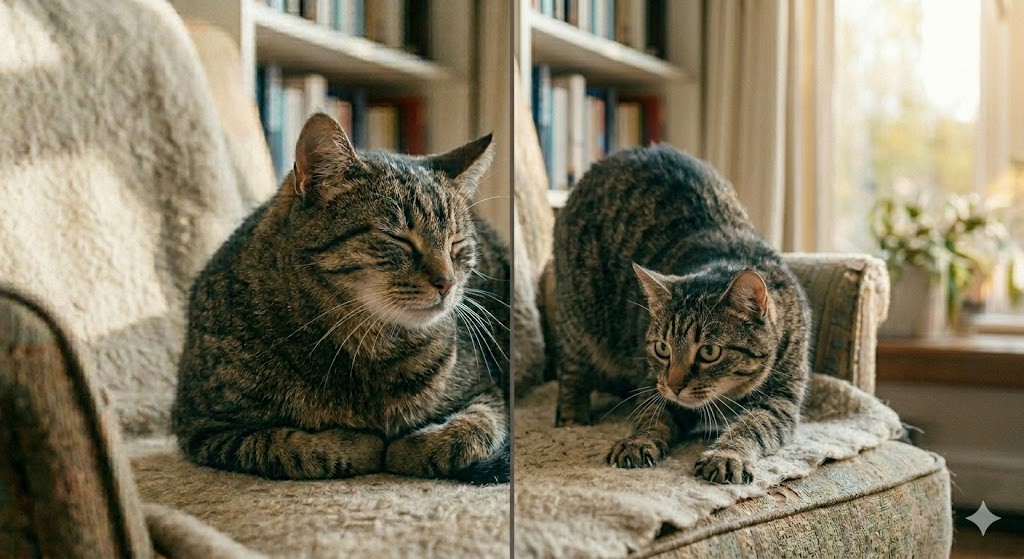
Cats are basically the masters of mystery. One minute they’re purring in your lap, the next they’re giving you the ‘don’t touch me’ glare from across the room. But here’s the kicker: behind all those little quirks and twitches is often a direct link to their health.
Obviously, your cat’s body language is like a secret code waiting to be cracked to understand what’s behind that unusual look or purr. The good news? You don’t need a degree in feline psychology—just some sharp observation skills and a willingness to play detective.
Tail Tales: What That Flick Really Means
- Slow swish side to side → irritation or warning (think: “I’m done with this cuddle session”).
- Fast lash → high stress, discomfort, or even pain.
- Curved question mark → playful, happy cat ready to pounce.
If your cat’s tail is suddenly thrashing more than usual, it could point to joint pain, hyperthyroidism, or even digestive discomfort.
Eyes and Ears: The Windows to Feline Wellness
- Dilated pupils in calm light → anxiety or possible hypertension.
- Half-shut, sleepy eyes → comfort… but also possible fever if it’s unusual.
- Ears back flat → fear or pain; if consistent, check for infections.
Pro tip: Cats rarely show pain openly (survival instinct!). Eye and ear shifts are some of the earliest red flags.
Grooming Habits: From Obsession to Avoidance
- Over-grooming (especially belly or paws) can signal allergies, fleas, or stress.
- Lack of grooming → often linked to arthritis, obesity, or illness.
If your once-meticulous kitty suddenly looks scruffy, it’s not laziness—it’s probably a health cue.
Hiding, Pacing, or Restlessness
Cats don’t sulk for fun. Sudden hiding, pacing, or refusing favorite spots often means discomfort or anxiety.
- Hiding in unusual places → pain or illness.
- Restless nighttime pacing → thyroid problems or cognitive decline (in senior cats).
Closing Matters
Cats may not talk, but they sure do communicate. Every tail flick, twitchy ear, or change in grooming is basically your cat’s way of sending you an SOS. The secret? Pay attention to patterns. If something shifts suddenly, don’t brush it off or think it may be some random thing. Just look into it deeply and try to understand it.