
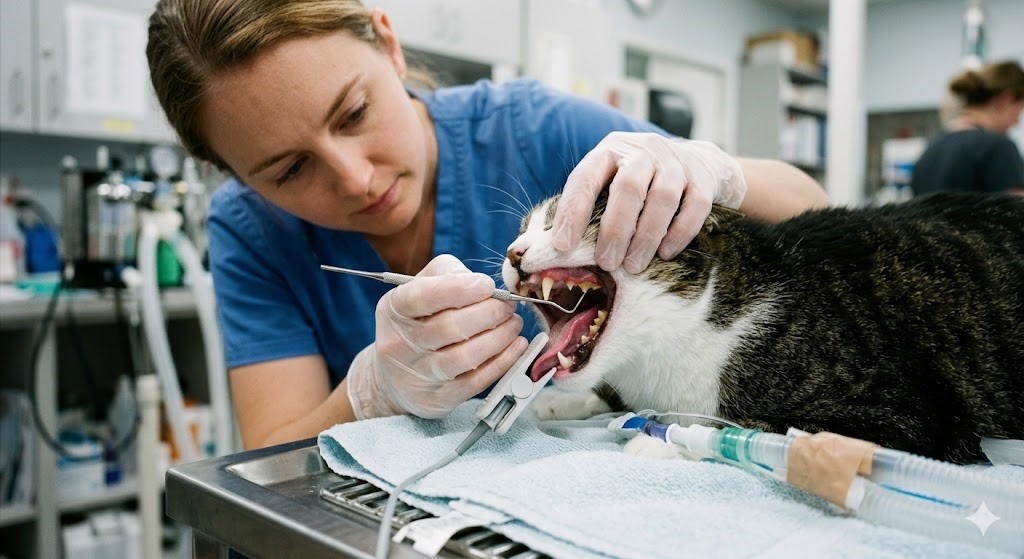
– Why Your Cat’s Smile Matters More Than You Think
Cats may act like they’ve got it all together—graceful, independent, and totally above your human worries—but when it comes to oral health, they’re masters at hiding problems.
A large US study found dental and gum disease among the most common issues affecting cats, yet many pet parents only notice it when it’s advanced and painful. If you’ve ever wondered whether your kitty’s ‘cute little hiss’ is just a mood swing or a warning sign, this guide is for you. Let’s talk teeth—because a healthy mouth equals a happy, thriving cat.
How Often Should You Check Your Cat’s Teeth?
Ideally, you should peek inside your cat’s mouth weekly (or at least a couple of times a month). Look for:
- Red, swollen gums
- Tartar buildup (yellowish-brown deposits)
- Bad breath (beyond the usual fishy whiff)
- Drooling or pawing at the mouth
Regular veterinary dental check-ups are recommended at least once a year, though older cats or those prone to dental issues may need more frequent exams.
Warning Signs You Should Never Ignore
Even subtle signs can indicate dental disease:
- Difficulty eating or dropping food from the mouth
- Weight loss or picky eating
- Behavioral changes like irritability or hiding
- Excessive drooling or facial swelling
Ignoring these can lead to pain, infection, and even systemic issues affecting the kidneys, heart, and liver. Basically, your cat’s mouth is a gateway to overall health—neglect it at your peril.
Home Care Tips
You don’t need to become a feline dentist overnight, but a little effort goes a long way:
- Brushing: Use cat-specific toothpaste (never human toothpaste) and a soft-bristled brush. Start slowly and reward with treats.
- Dental Toys and Treats: Crunchy toys and dental chews help reduce plaque naturally.
- Routine Vet Cleanings: Professional cleanings remove tartar and catch early issues before they become emergencies.
- Diet Choices: Certain kibble and wet-food formulas are designed to promote oral health.
Final Thought
Here’s the truth: cats are pros at hiding pain. That subtle hiss or avoidance of food? It could be a warning sign you don’t want to miss. Regular checks, home care, and vet visits aren’t just ‘nice-to-have’—they’re essential for a longer, healthier, and happier feline life. So, put down that latte, grab the cat toothpaste, and give those little pearly whites some love with gentle care. Because a healthy cat mouth = fewer vet bills, more purrs, and endless cuddles with BIG GRIN. And honestly, who doesn’t want that?