

Pet insurance sounds comforting until you actually need to use it. Many pet parents sign up thinking every vet bill will be covered, only to face surprises when claims are rejected. The truth is, pet insurance can be extremely helpful, but only when you understand its limits clearly.
If you have ever wondered why some treatments are reimbursed while others are not, this guide breaks it all down in simple terms. Let us look at what pet insurance usually covers, what it does not, and how to avoid unpleasant surprises later.
No doubt, many pet parents only realise the value of insurance after facing unexpected vet expenses that can quickly strain monthly budgets. Learn more.
What Pet Insurance Usually Covers
Most pet insurance plans are designed to protect you from unexpected and expensive medical situations. Coverage can vary by provider, but these are the most common inclusions.
Accidents and Injuries
Accidents are the backbone of pet insurance coverage. This includes injuries from falls, road accidents, burns, fractures, bite wounds, or ingestion of foreign objects. Emergency surgeries related to accidents are usually covered once deductibles are met.
Illnesses and Infections
Pet insurance generally covers treatment for common illnesses such as infections, stomach issues, respiratory conditions, allergies, skin problems, and chronic diseases like diabetes or arthritis. Diagnostic tests, medications, and hospital stays related to covered illnesses are often included.
Diagnostic Tests and Imaging
X-rays, blood tests, ultrasounds, MRI scans, and other diagnostic tools are commonly covered when they are required to diagnose a covered illness or injury.
Hospitalization and Surgery
If your pet needs surgery or overnight care due to an accident or illness, insurance can significantly reduce the financial burden. This is where many pet parents truly feel the value of insurance.
Prescription Medications
Medications prescribed by a veterinarian for covered conditions are usually reimbursable, although some policies set limits on long-term medication coverage.
Hereditary and Congenital Conditions
Many modern policies cover hereditary conditions such as hip dysplasia, heart conditions, or breed-specific issues, provided the symptoms were not present before the policy started.
Therefore, this is especially helpful during emergency vet treatments where quick decisions and high costs go hand in hand.
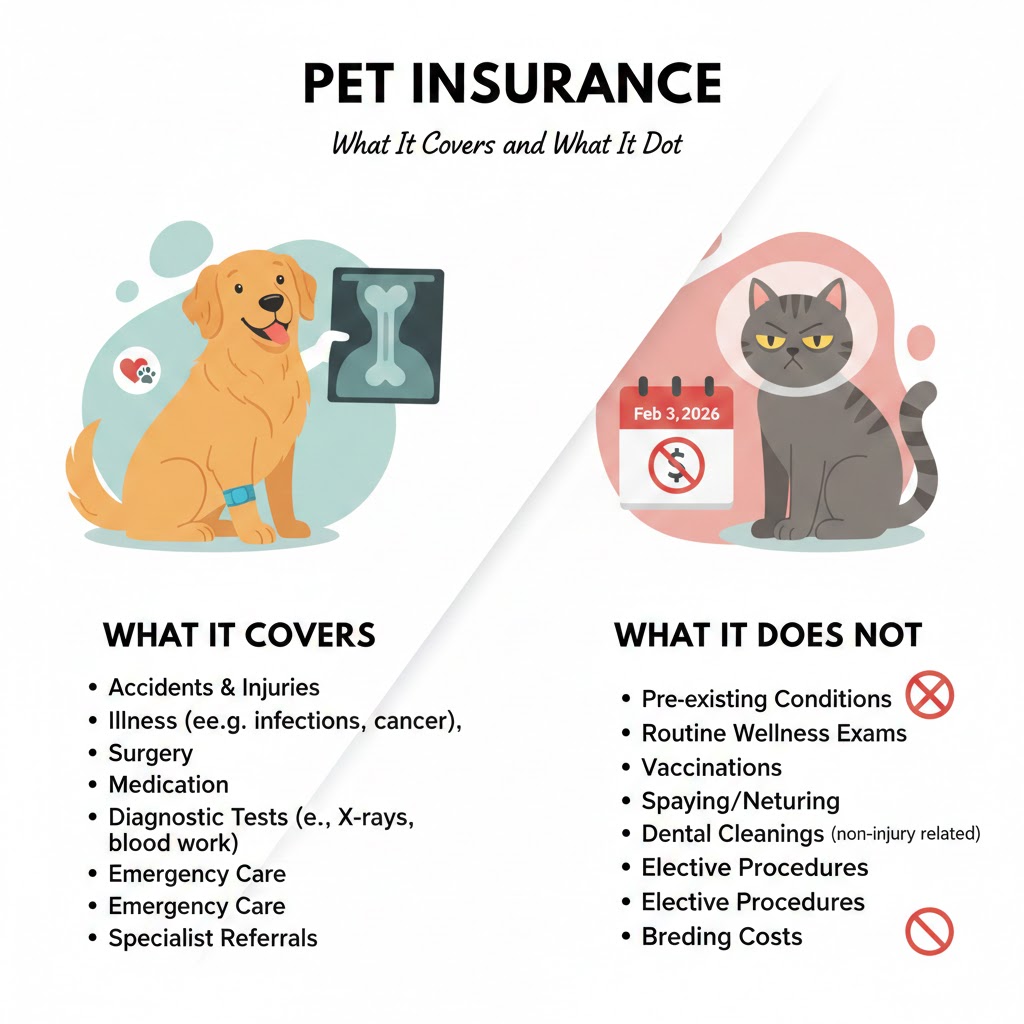
What Pet Insurance Does Not Cover
This is where misunderstandings happen most often. Knowing exclusions is just as important as knowing coverage.
Pre-Existing Conditions
Any illness or condition your pet had before the insurance policy started will not be covered. This includes recurring problems, even if symptoms appear mild at first.
Routine and Preventive Care
Most standard pet insurance plans do not cover routine expenses such as vaccinations, annual health checkups, flea and tick treatments, grooming, or dental cleaning. Some providers offer optional wellness add-ons for these.
Behavioral Treatments
Training sessions, behavioral therapy, or treatment for anxiety-related issues are usually excluded unless specifically mentioned in the policy.
Cosmetic and Elective Procedures
Procedures such as tail docking, ear cropping, declawing, or cosmetic surgeries are not covered.
Breeding and Pregnancy
Costs related to breeding, pregnancy, whelping, or cesarean sections are typically excluded from coverage.
Diets and Supplements
Prescription diets, nutritional supplements, and vitamins are generally not reimbursed unless explicitly stated in the policy.
Alternative Therapies
Treatments like acupuncture, hydrotherapy, chiropractic care, or holistic therapies may not be covered unless your plan offers expanded or premium coverage.
Understanding Deductibles, Limits, and Reimbursements
Even covered claims may not be paid in full. Most pet insurance policies include a deductible, which is the amount you pay before insurance kicks in. There are also annual or lifetime coverage limits and reimbursement percentages, often ranging from 70 to 90 percent.
Understanding these details helps set realistic expectations and prevents frustration during claims.
Is Pet Insurance Worth It?
Pet insurance is not meant to replace regular budgeting for routine care. It works best as a safety net for major, unexpected medical expenses. If your pet faces a serious illness or accident, insurance can save you from making difficult financial decisions during emotional moments.
For young pets, insurance is especially valuable since they are less likely to have pre-existing conditions. For older pets, coverage can still help, but it should be chosen carefully.
How to Choose the Right Pet Insurance Plan
Before buying a policy, ask yourself what matters most. Is it emergency coverage, chronic illness support, or budget-friendly premiums? Compare exclusions carefully, read claim settlement reviews, and understand waiting periods.
Choosing the right plan is less about finding the cheapest option and more about finding one that fits your pet’s lifestyle and health risks.
Learn more about what you pay for and what you don’t with pet insurance explained simply.
Final Thoughts
Pet insurance is not a magic solution, but it can be a powerful tool when used wisely. Knowing what is covered and what is not helps you make informed decisions and truly benefit from your policy.
A little clarity today can save a lot of stress tomorrow when your pet needs you the most.
FAQs
1. Does pet insurance cover vet visits?
Vet visits are covered only if they are related to an illness or accident. Routine checkups are usually excluded unless you have a wellness add-on.
2. Can I get pet insurance for an older pet?
Yes, many providers insure older pets, but premiums may be higher, and coverage for pre-existing conditions will not apply.
3. Is dental care covered under pet insurance?
Dental injuries caused by accidents may be covered. Routine dental cleaning and periodontal disease are usually excluded.
4. How soon can I use pet insurance after buying it?
Most policies have a waiting period ranging from a few days for accidents to several weeks for illnesses.
5. Does pet insurance work worldwide?
Some global providers offer international coverage, but many policies are country-specific. Always check geographic limitations before traveling.